The decisions being made right now about AI—investment, regulation, governance—will shape the UK for decades. As a policy leader, you need to understand this context to contribute effectively.
The Bottom Line
The UK is betting big on AI while navigating between US and EU approaches. Every organisation is creating dependencies that will be difficult to unwind. The strategic choices are being made now—often by default rather than design.
The Investment Wave
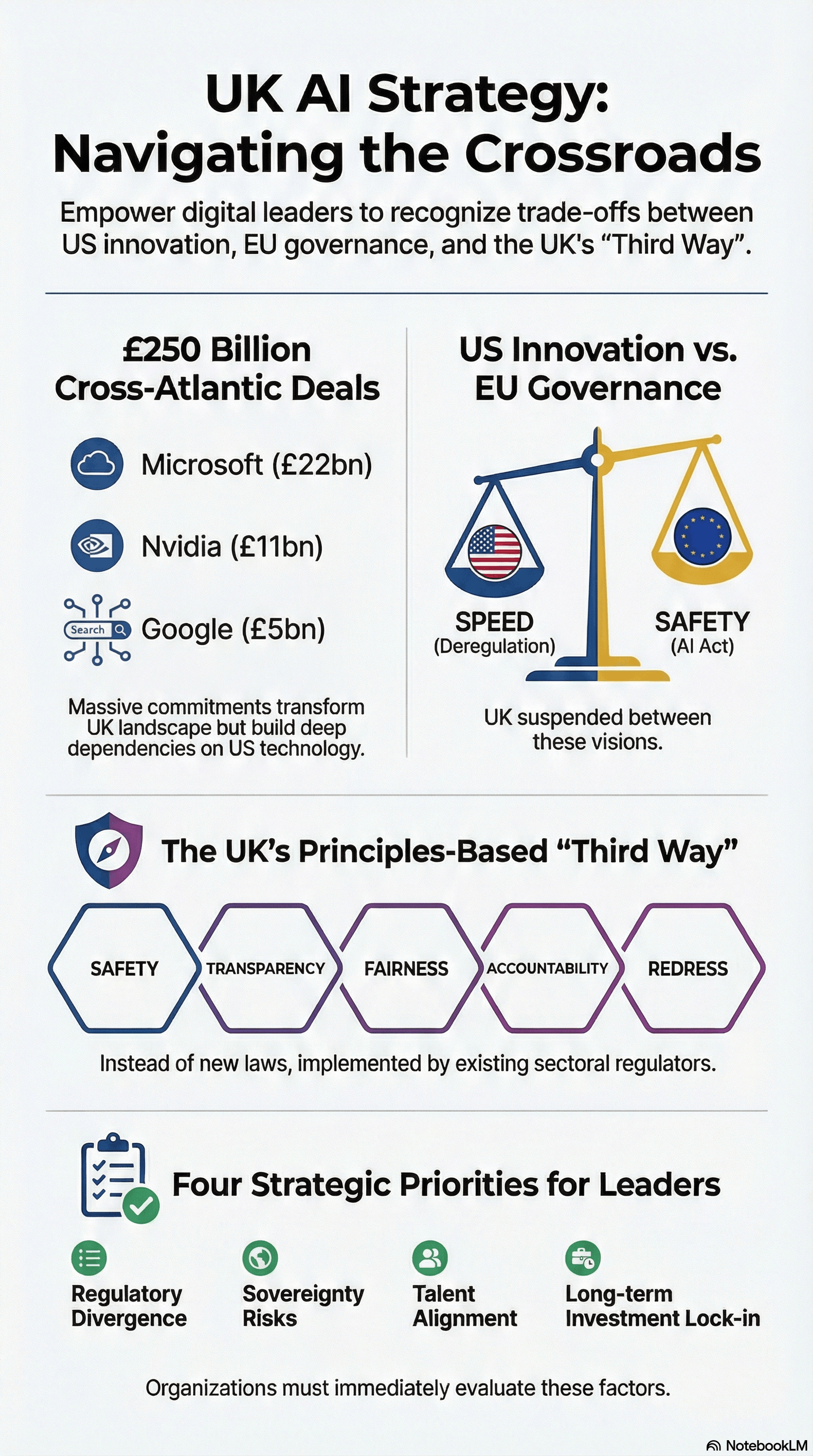
September 2025 brought what's been called "the largest commercial package ever secured during a state visit."
- Microsoft: £22 billion
- Nvidia: £11 billion
- Google: £5 billion
- North East AI Growth Zone: £30 billion expected investment
This isn't just infrastructure spending. It's the creation of dependencies.
Your Organisation
What AI services do you rely on? Who provides them? Where is your data processed? Who made those decisions?
Two Models. One Choice.
US Model: Innovation First
Regulatory barriers removed. Speed prioritised. Market-driven outcomes. Open-source AI and sandboxes favoured over legislation.
EU Model: Governance First
The AI Act—first comprehensive legal framework worldwide. Risk-based approach. Safety and rights prioritised. Critics warn it may hobble competitiveness.
The UK has declared a "third way"—principles-based, working through existing sector regulators. Five high-level principles: safety, transparency, fairness, accountability, contestability.
The question: is this genuine strategic differentiation, or an uncomfortable straddle that satisfies neither objective?
The Sovereignty Question
"Sovereignty" isn't abstract philosophy. It's operational reality:
- Operational continuity: Can critical services continue if a provider prioritises their home market?
- Data security: Who has access to sensitive data, under what legal framework?
- Strategic autonomy: Can the UK make independent choices about AI deployment?
The Hard Question
If access to compute becomes constrained and trusted partners prioritise their own national needs, where does that leave UK organisations? Where does it leave yours?
Four Implications for Policy Leaders
1. Regulatory Uncertainty
Sector-specific UK approach means different requirements by industry. International operations multiply complexity. Hedging between UK and EU rules has costs.
2. Data Decisions Matter
Every choice about where data is processed, which AI services you use, and which providers you contract with is a strategic decision with long-term implications.
3. Vendor Concentration Risk
Heavy reliance on one or two major AI providers exposes you to their strategic choices, pricing decisions, and potential service disruptions.
4. Capability Gap
The UK's ability to chart an independent course depends on domestic capability. Over-reliance on overseas providers weakens this over time.
The Debate We're Not Having
The UK wants innovation velocity while maintaining governance credibility. Massive foreign investment while preserving sovereignty. AI leadership while avoiding difficult conversations about what kind of leadership we aspire to.
These aspirations aren't necessarily contradictory—but we're not being transparent about the trade-offs.
Questions to Take Forward
- "What is our position on AI sovereignty, and who made that decision?"
- "If we had to operate without our primary AI provider for six months, what would happen?"
- "Are we preparing for UK regulatory requirements, EU requirements, or both? What's the cost of hedging?"
- "How are we building internal AI capability versus buying it in?"
- "What AI governance decisions are we making by default rather than by design?"
Key Takeaway
The UK's AI strategy is being written now—in the investments being made, partnerships formed, and regulatory choices established. As a leader, your decisions are part of shaping it. Understanding this context isn't optional.
Visual Summary